
Hovering over an image will enlarge it and point out features (works better on desktop than on mobile).
 A camera indicates there are pictures.
 A speaker indicates that a botanical name is pronounced.
 A plus sign after a Latin name indicates that the species is further divided into varieties or subspecies.
Most habitat and range descriptions were obtained from Weakley's Flora.
Your search found 2 taxa in the family Taxaceae, Yew family, as understood by Weakley's Flora.
)

 Common Name:
Canada Yew, American Yew
Common Name:
Canada Yew, American Yew
Weakley's Flora: (4/24/22) Taxus canadensis FAMILY: Taxaceae
SYNONYMOUS WITH PLANTS National Database: Taxus canadensis FAMILY: Taxaceae
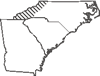
Habitat: Cliffs, bluffs, and rocky slopes over calcareous or mafic rocks, red spruce and hemlock swamps and bogs
Rare
Native to North Carolina
)
)
)
 Common Name:
Florida Torreya, Stinking-cedar
Common Name:
Florida Torreya, Stinking-cedar
Weakley's Flora: (4/24/22) Torreya taxifolia FAMILY: Taxaceae
SYNONYMOUS WITH PLANTS National Database: Torreya taxifolia FAMILY: Taxaceae
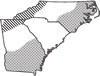
Habitat: Moist ravines and bluffs, sometimes planted well outside its native range as an ornamental, and also rarely established near plantings
Rare or waif(s)
Native to Georgia Coastal Plain (introduced elsewhere in GA-NC-SC)
Your search found 2 taxa. You are on page PAGE 1 out of 1 pages.